
 Friday, 15 June, 2007 UPDATE
So cheers may have turned to tears. I was celebrating on Wednesday the news that red and pink coral received international protection by CITES. Seems that some last minute lobbying has resulted in no Appendix II listing for these threatened species of coral. Read on for the original post below and then join me in a collective smack to our foreheads over the lack of vision of the assembly (and I suspect the greed of special interest groups.)
Wednesday, 13 June, 2007 ORIGINAL POST
There's some reason to celebrate today. This week, the Convention on International Trade in Endangered Species of Wild Fauna and Flora, or CITES (pronounced sight-eeze), is meeting in The Hague. CITES is an international agreement between governments that aims to ensure that international trade in specimens of wild animals and plants does not threaten their survival. The reason I'm feeling celebratory is that red and pink corals (genus Corallium) received international trade protection today after 62 countries voted to list these over-harvested species under the CITES Appendix II listing.
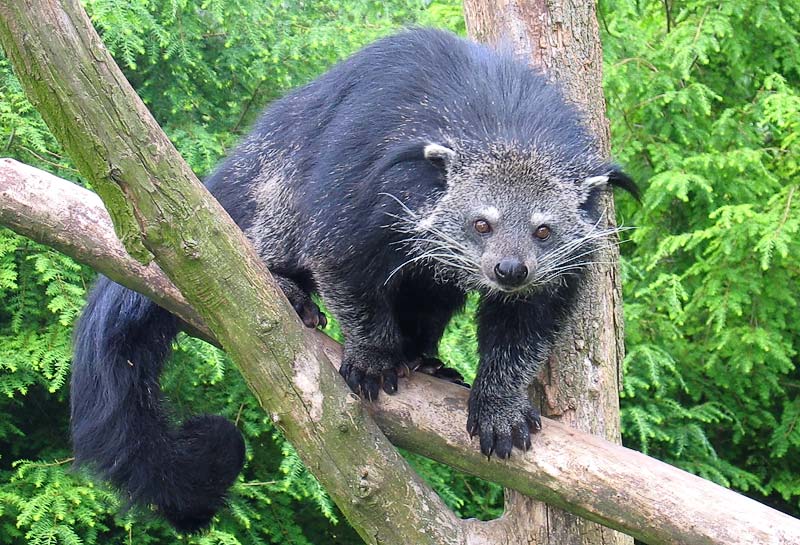
CITES can confer listing of species as either Appendix I, II, or III. Appendix I includes species threatened with extinction. Trade in specimens of these species is permitted only in exceptional circumstances (usually having something to do with research and conservation). So if you were hoping to receive a Spiny Echidna, Honey Badger, or Binturong for your birthday, forget it... they are all Appendix I listed. Appendix II includes species not necessarily threatened with extinction, but in which trade must be controlled in order to avoid depletion of the species or elevation to Appendix I status. Appendix III contains species that are protected in at least one country, which has asked other CITES Parties for assistance in controlling the trade.
The U.S. government had originally proposed that CITES list red and pink coral species on Appendix II of CITES. This newly approved designation will require that any government that exports or imports items made of red and pink coral demonstrate that trade in these species does not adversely impact its future survival.
 Consumer items made from red and pink coral are very popular right now in the form of jewelry and decorative items. With a finished necklace retailing for up to $20,000 US, precious red corals are among the world’s most valuable wildlife commodities. Since 2005 there has been a worldwide resurgence in coral popularity, and it is in high demand for jewelry, art and curios, particularly in Europe and Asia. An Appendix II listing will be a strong step to improve the monitoring and tracking of red coral trade. There are also interactions between this potential ruling and bottom trawling regulations.
 To help spread the word and build public awareness of this issue, SeaWeb has launched a fantastic new campaign, Too Precious To Wear. The beautiful logo (pictured at the top of this post) is specifically designed to capture the eye and attention of consumers. Beyond just designing a pretty logo, SeaWeb has secured the support and commitment of The Tiffany & Co. Foundation. Tiffany & Co. (begin humming Moon River here) is arguably the world's preeminent retailer of exquisitely designed, high-value jewelry. Recognizing the growing demand for jewelry materials sourced sustainably and ethically (think Blood Diamond) from the land and ocean (diamonds, pearls, coral, shell, etc.) the company established an environmental policy. Their environmental statement reads that,
 It is from nature that Tiffany & Co. draws the raw materials and inspiration that have shaped the company's design heritage. The mission of the foundation's Environment Program is to support organizations dedicated to the conservation of natural resources in the areas of responsible mining, coral reef conservation, and land protection.Way to go SeaWeb, and Tiffany & Co. Foundation! It's important to see big corporations like Tiffany not take the path of greenwashing. They're partnering with marine conservation organizations and investing to help preserve an ecosystem on which their company depends. When so much of the ocean environmental news is grim, the occasional good news like this is incredibly welcome.








4 comments:
Great news on corals!! Fins crossed and holding my breath for a possible CITES listing of spiny dogfish. Spiny dogfish listing lost (barely) in committee, but being re-raised in plenary session, the odds are not great. Ocean conservationists, cross your fins for a miracle tomorrow!
Rick,
Latest word says coral protections were overturned in the plenary session at CITES. Sadly, I think coral trade limits will have to wait.
Mark
In the open ballot of Wednesday, nearly 69% of delegates voted in favor of the listing.
This second, final vote took place after the meeting was officially scheduled to close. Key delegates, including the US scientist who authored the proposal, had already been forced to leave to catch their flights home
The US delegation estimates that the secret ballot cost us a minimum of 13 votes, as it frees countries from being held accountable for their decisions
There was not one refutation of the scientific evidence of decline in this species presented on the floor. Even the FAO and exporting countries explicity acknowledge that these species are vulnerable to overharvesting and in need of strong management.
This was a clear example of political maneuvering by unscrupulous industry lobbyists to block conservation efforts
secret votes? no accountibility? uncsrupulous industry lobbyists?
at least our US government doesn't operate this way...
DOH!
Post a Comment